Meet Gigi, Alexander and Lillibet
By Jules Morris · First shared October 2026
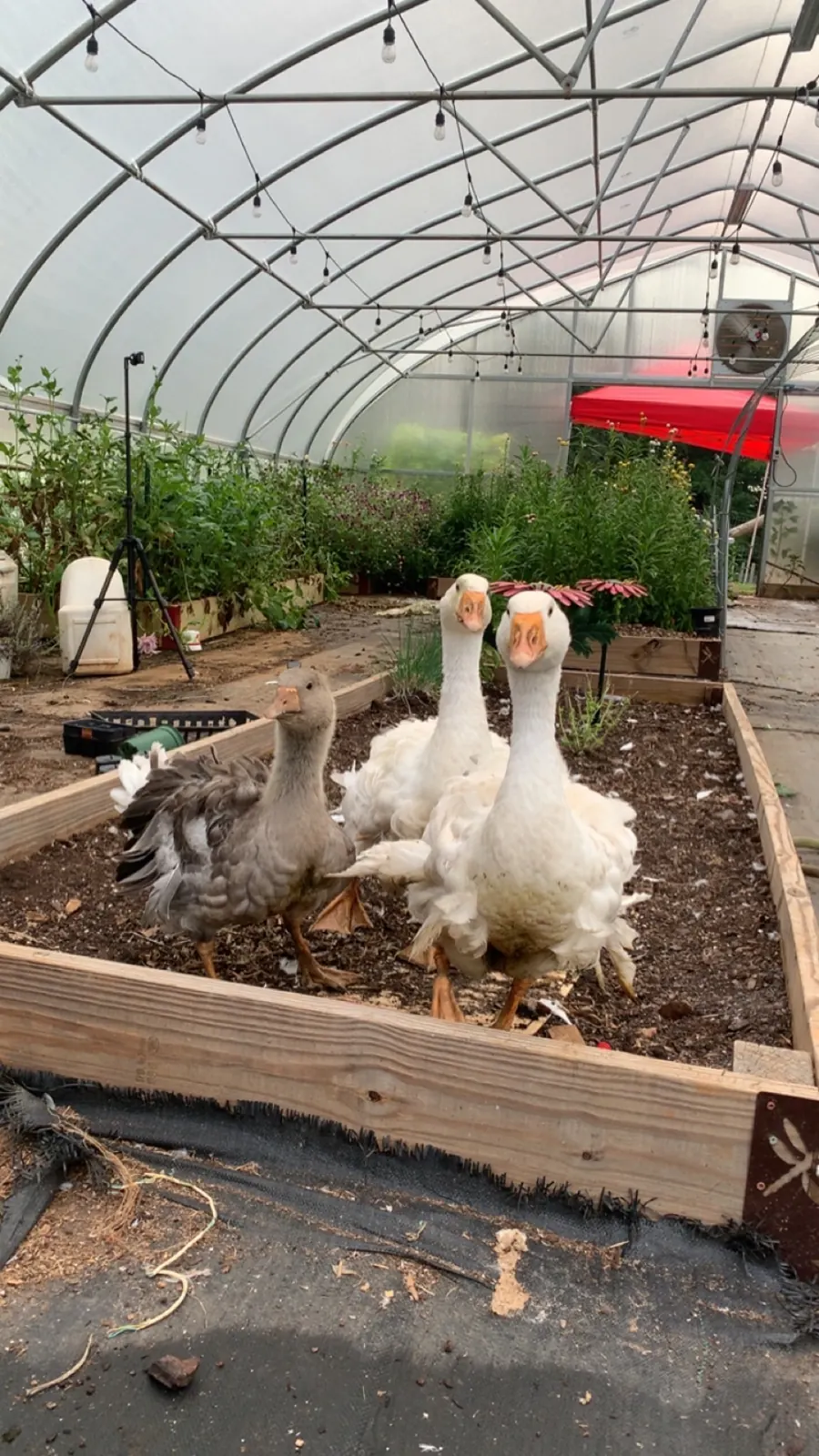
The short version: this summer three Sebastopol geese joined the farm: Gigi, Alexander and Lillibet. Sebastopols are a threatened breed with long curling feathers that keep them from flying. They spend their days in our greenhouse, and their own cedar house is going up next door.
Three goslings and their names
Gigi and Alexander hatched at the turn of June. Lillibet hatched right here on June 14, the only one of the three born on the farm.
- Gigi is named for Lane’s mother, and she carries herself like it.
- Alexander is named for Alexander the Great, which has gone straight to his head.
- Lillibet is named for what the royal family called Queen Elizabeth as a little girl. She was so adorable she deserved a royal name.
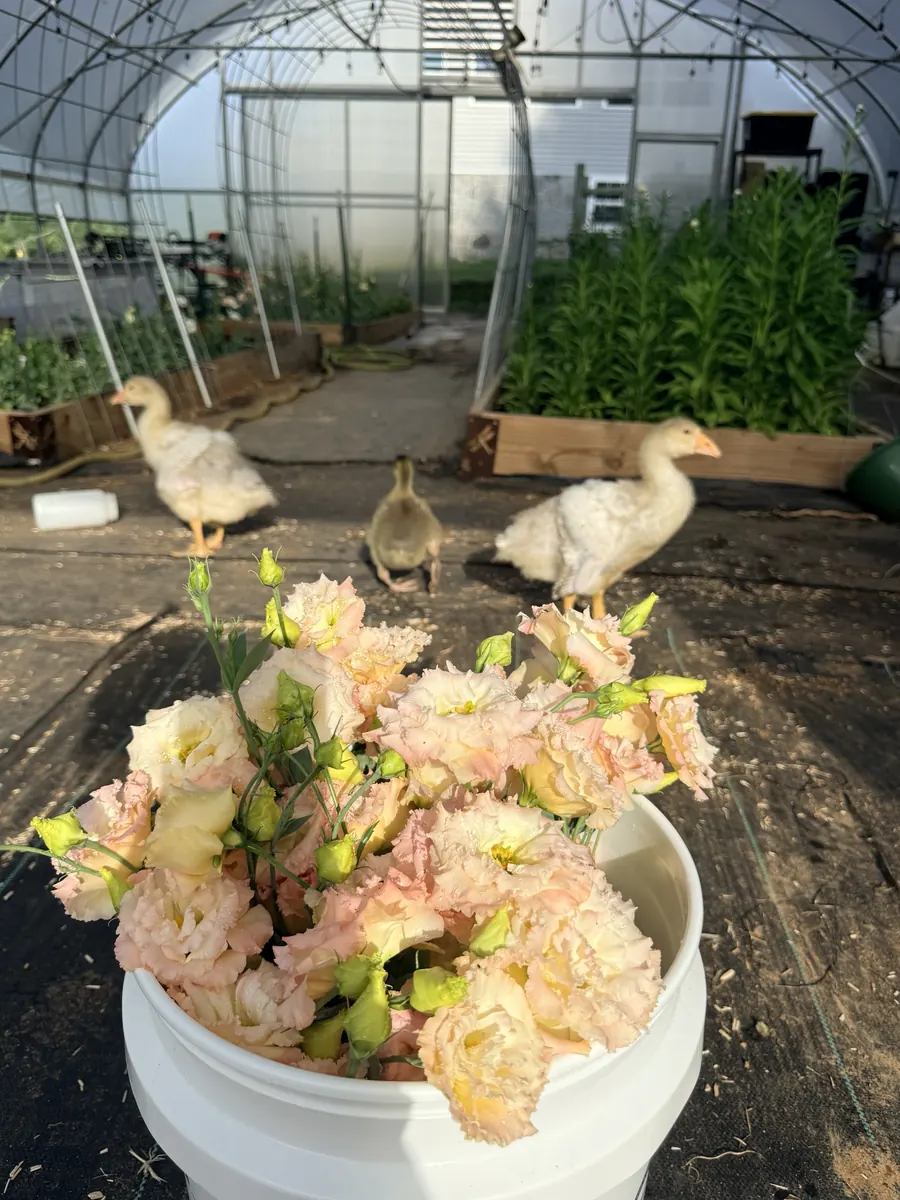
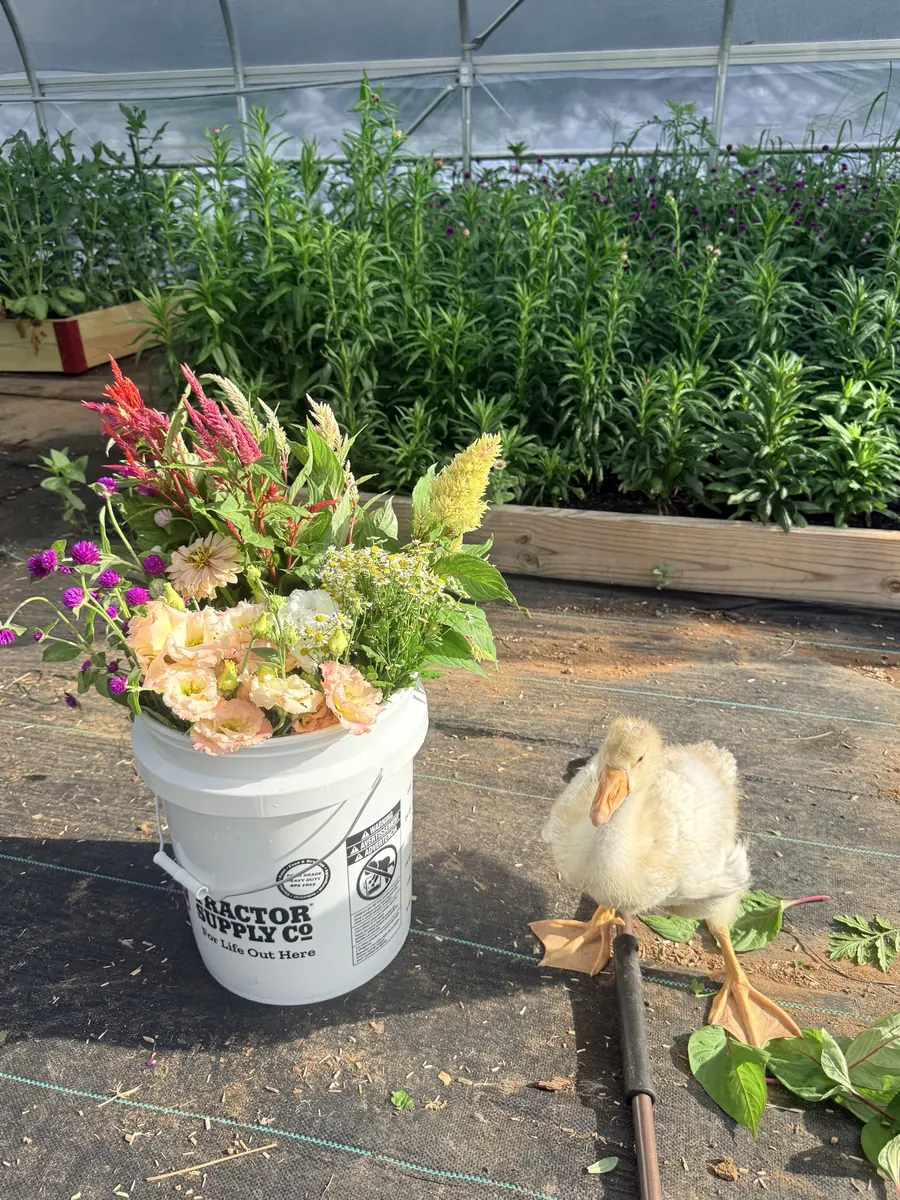
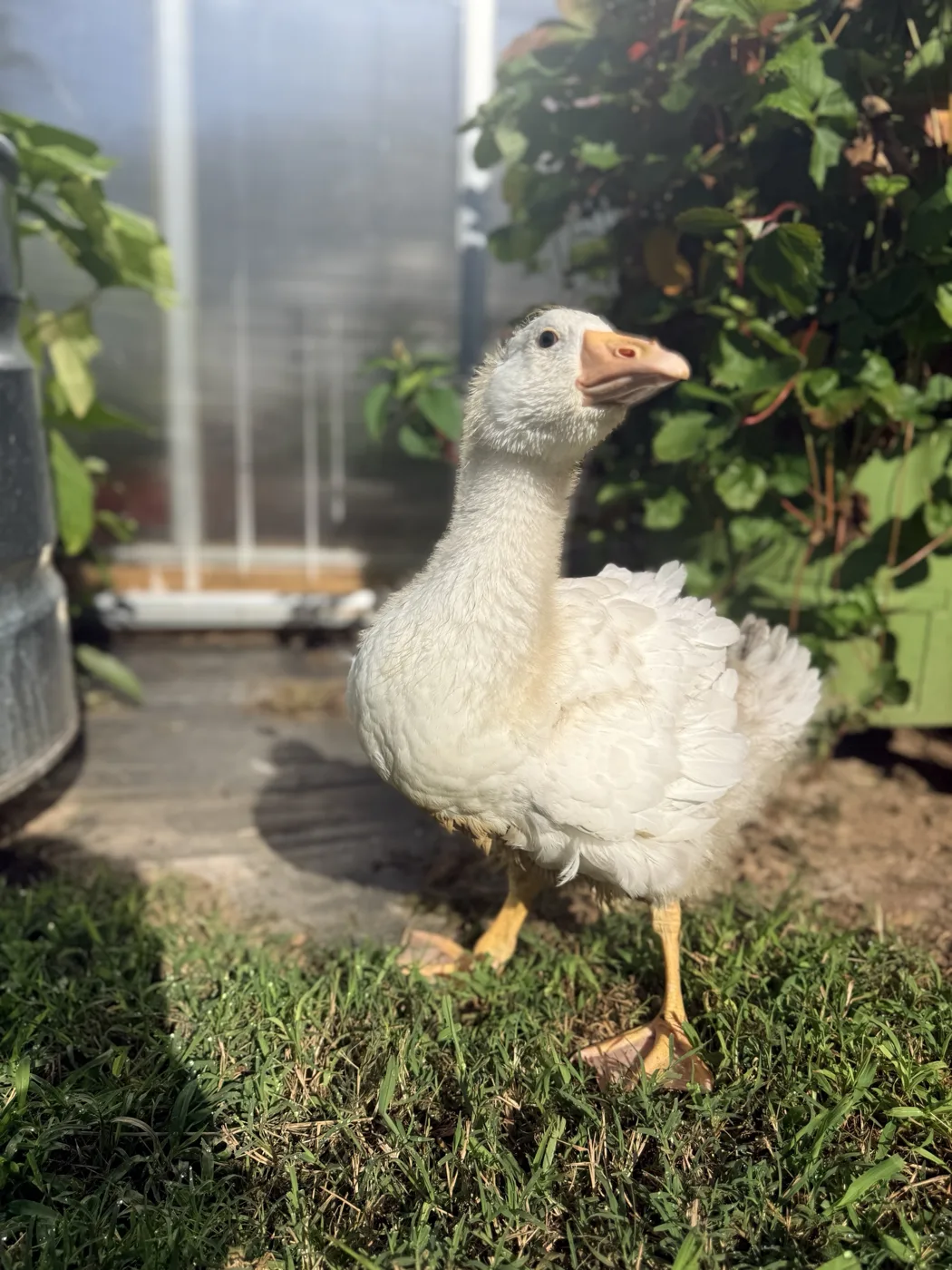
Watch the three of them grow up, from fuzzy goslings to curly-feathered geese:
Lillibet and the bucket-handle splint
Lillibet’s leg went wrong early. The tendon in her hock kept slipping out of place. Our vet, Dr. Lauren, and her vet tech built Lillibet a splint out of a bucket handle from the hardware store and put her on cage rest. She was extremely dramatic about it. It worked.
Leg trouble in goslings has to be caught early, while the bones are still soft. Once a bone sets crooked, it stays that way. Niacin matters here too: ducklings and goslings need two to three times as much as chicks, and most niacin problems show up in the first ten weeks. We added brewer’s yeast to their feed for that reason.
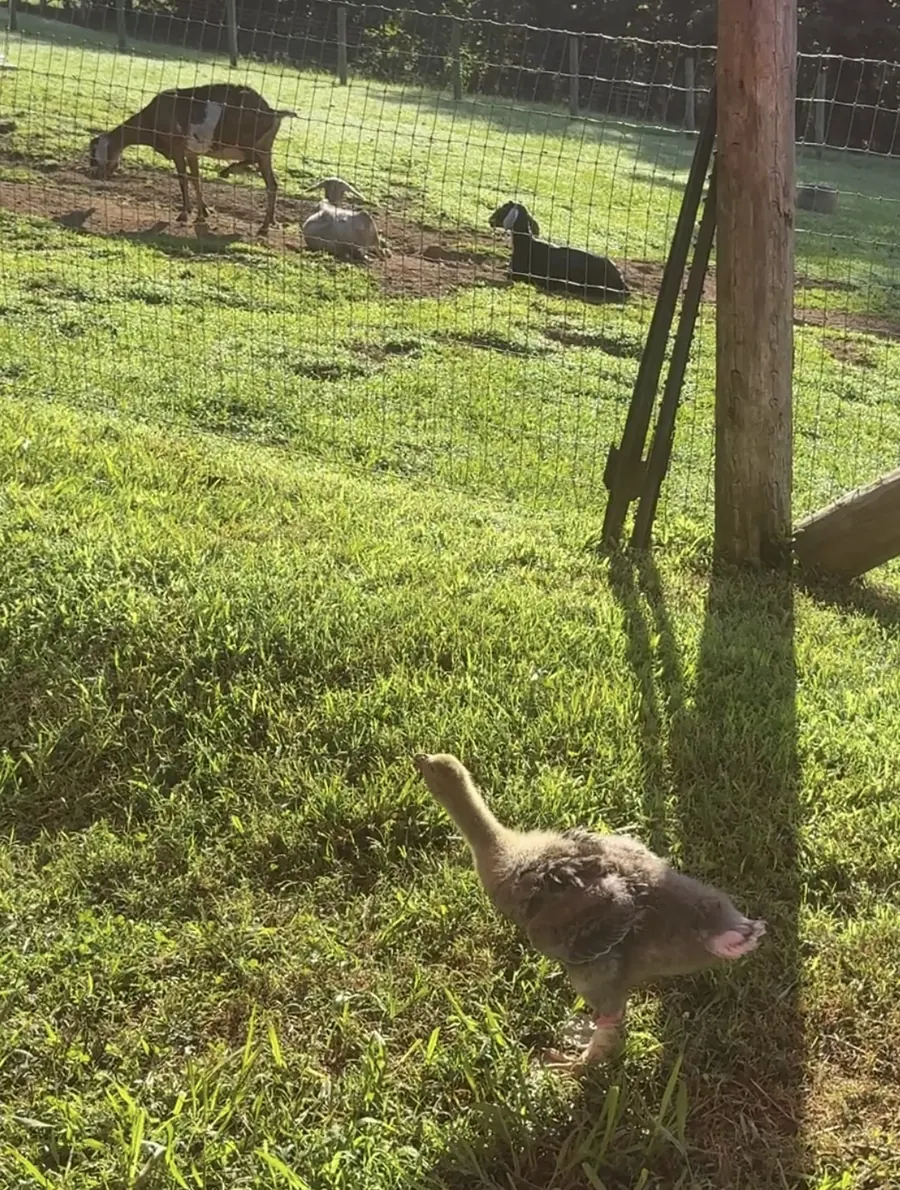
Watch Dr. Lauren build and fit Lillibet’s splint:
What makes a Sebastopol a Sebastopol
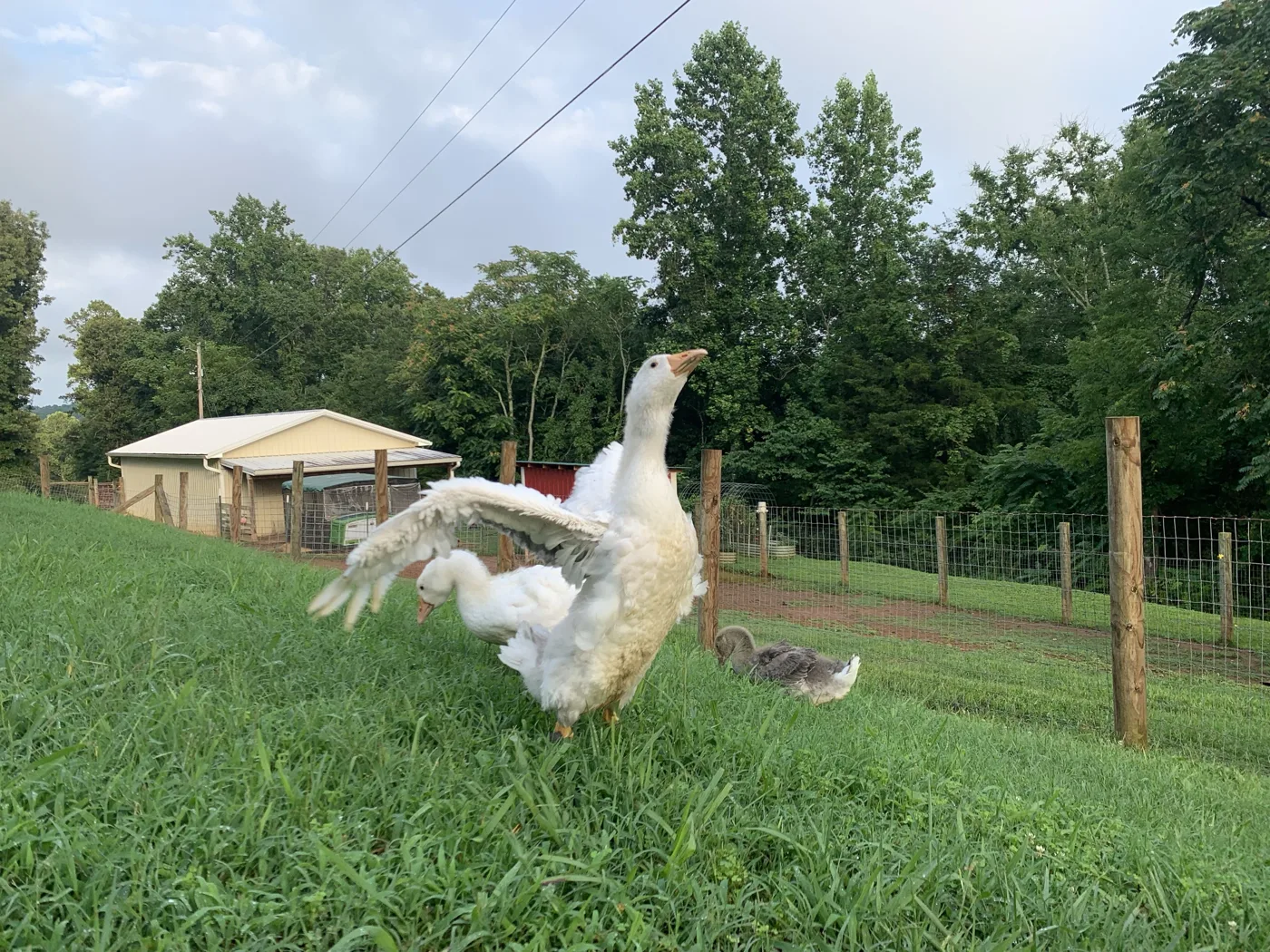
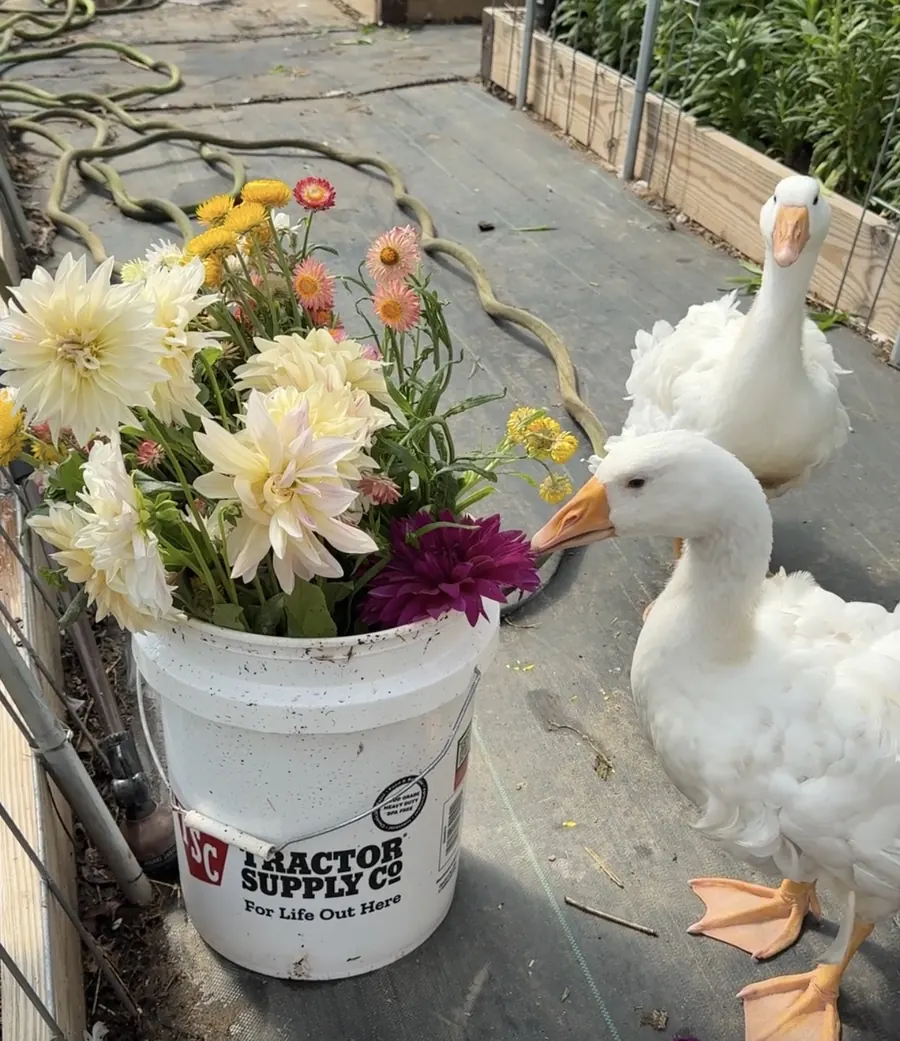
- Threatened. The Livestock Conservancy lists the breed as Threatened.
- Old World roots. Sebastopols come from southeastern Europe, likely around the Black Sea, and were developed from wild Graylag geese. The breed is named for the city of Sebastopol and was recognized by the American Poultry Association in 1938.
- Curls instead of flight. Long, soft, spiraling feathers hang from the wings, back and tail, nearly to the ground. They also keep the geese from flying.
- Gentle by goose standards. They are quiet, friendly and more shy than aggressive, and they don’t like to wander.
- Not built for bad weather. Loose feathers hold less warmth and shed water poorly, so they need more shelter than most geese in cold, wet, windy weather.
- Water lovers. They need clean water for bathing to keep that plumage in shape.
- Grown size. Mature ganders weigh about 14 pounds and geese about 12.
Life in the greenhouse
The goslings spent the summer with free range of our 40-by-60-foot greenhouse during the day, wandering the walkways between the flower beds and foraging on grass outside. It was such a good summer that we decided the fenced lot around the greenhouse would be their home for good.
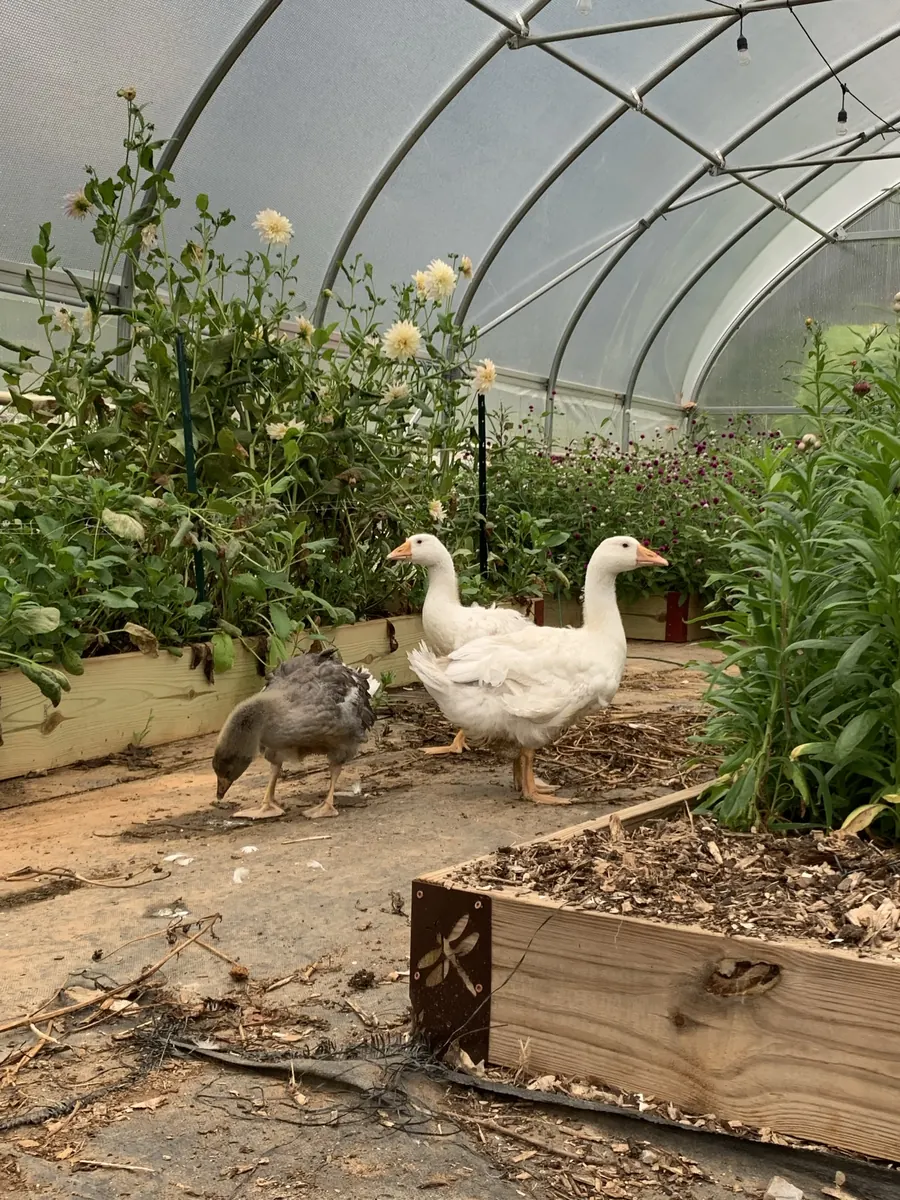
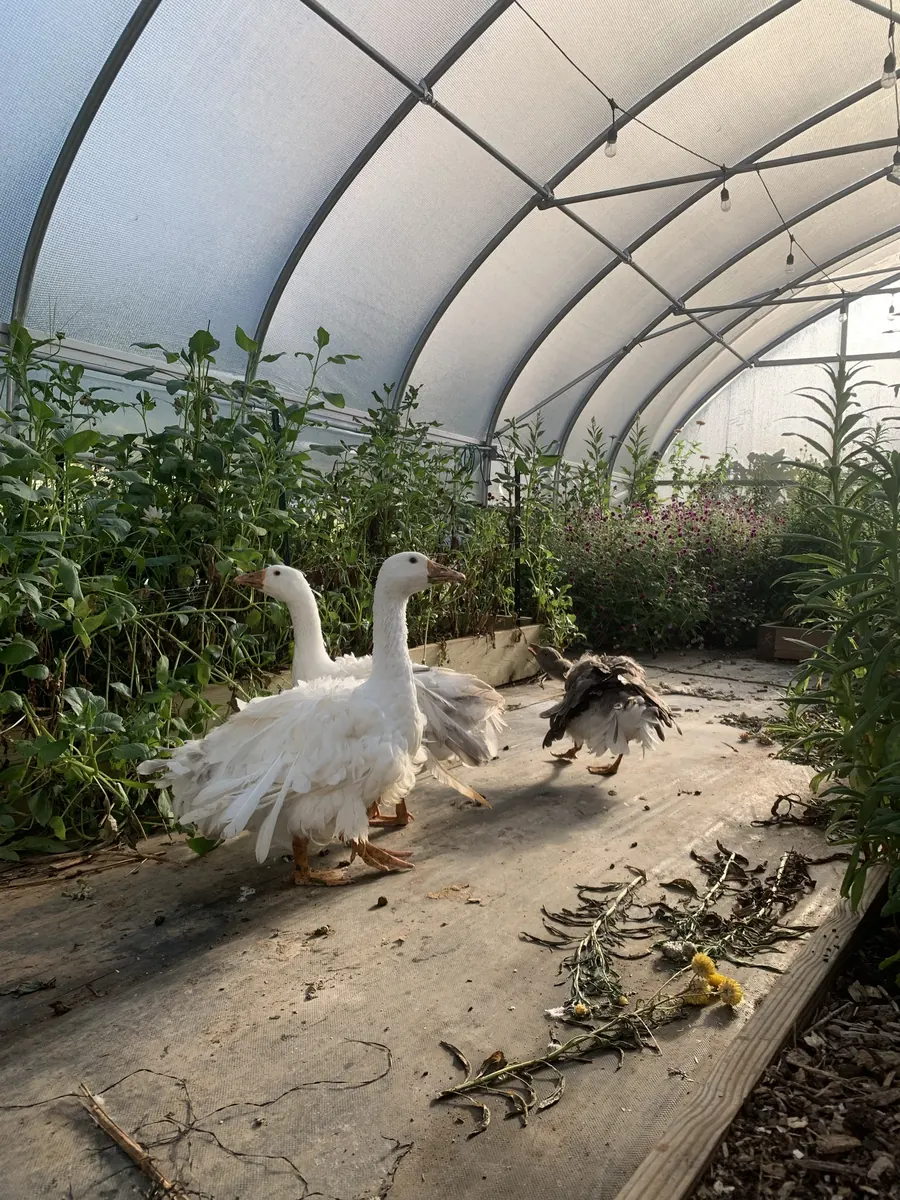
Next up is a cedar shed of their own on a concrete pad by the greenhouse, ready before the cold weather. Sebastopols need that extra shelter more than most geese, and a safe house at night keeps a goose that can’t fly safe from predators. We’re putting pea gravel in the walkways for drainage, with horse stall mats down the center aisle so the geese’s favorite path can be hosed off.
Questions people ask about Sebastopol geese
Can Sebastopol geese fly?
No. Their long, curled wing feathers keep them from flying, so they stay close to home. That also makes them easy prey, so they need a secure house at night.
Are Sebastopol geese rare?
Yes. The Livestock Conservancy lists the Sebastopol goose as Threatened.
Why do goslings need niacin?
Ducklings and goslings need two to three times the niacin that chicks do. Without enough, their legs can come in weak or crooked, and most of those problems show up in the first ten weeks. Brewer’s yeast or vitamin B3 helps.
Do Sebastopol geese need a pond?
They need clean water deep enough to put their whole heads under. It’s how they clear their nostrils and keep those feathers in good shape. A small pool works if you keep it clean.
For your own birds, ask your vet. Breed facts come from The Livestock Conservancy. Niacin facts come from Metzer Farms.