Rainey and Charlie Come Home
By Jules Morris · First shared October 2026
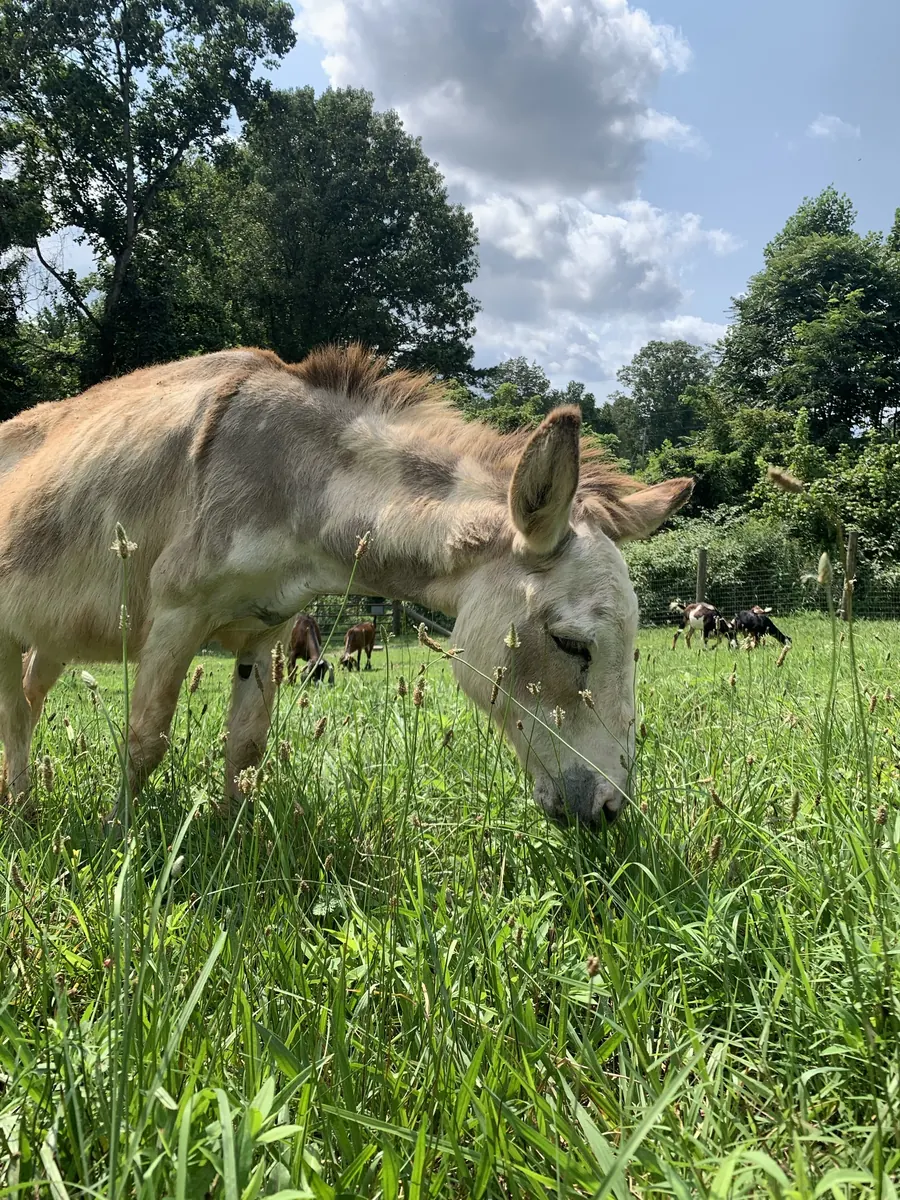
The short version: at the end of 2025, two mini donkeys came to us for sanctuary, Rainey Lainey and Charlie Pride. They are the first to greet visiting children and will stand forever for a scratch. Soon after, Rainey choked and needed emergency vet care. She came through it, and that night changed how we feed her and why we keep money set aside for emergencies.
Every mini donkey on this farm is named for a country music legend. Reba, Minnie Pearl, Loretta and Hank were already here, so Rainey Lainey and Charlie Pride fit right in. They joined the herd at the end of 2025, and they are here for good.
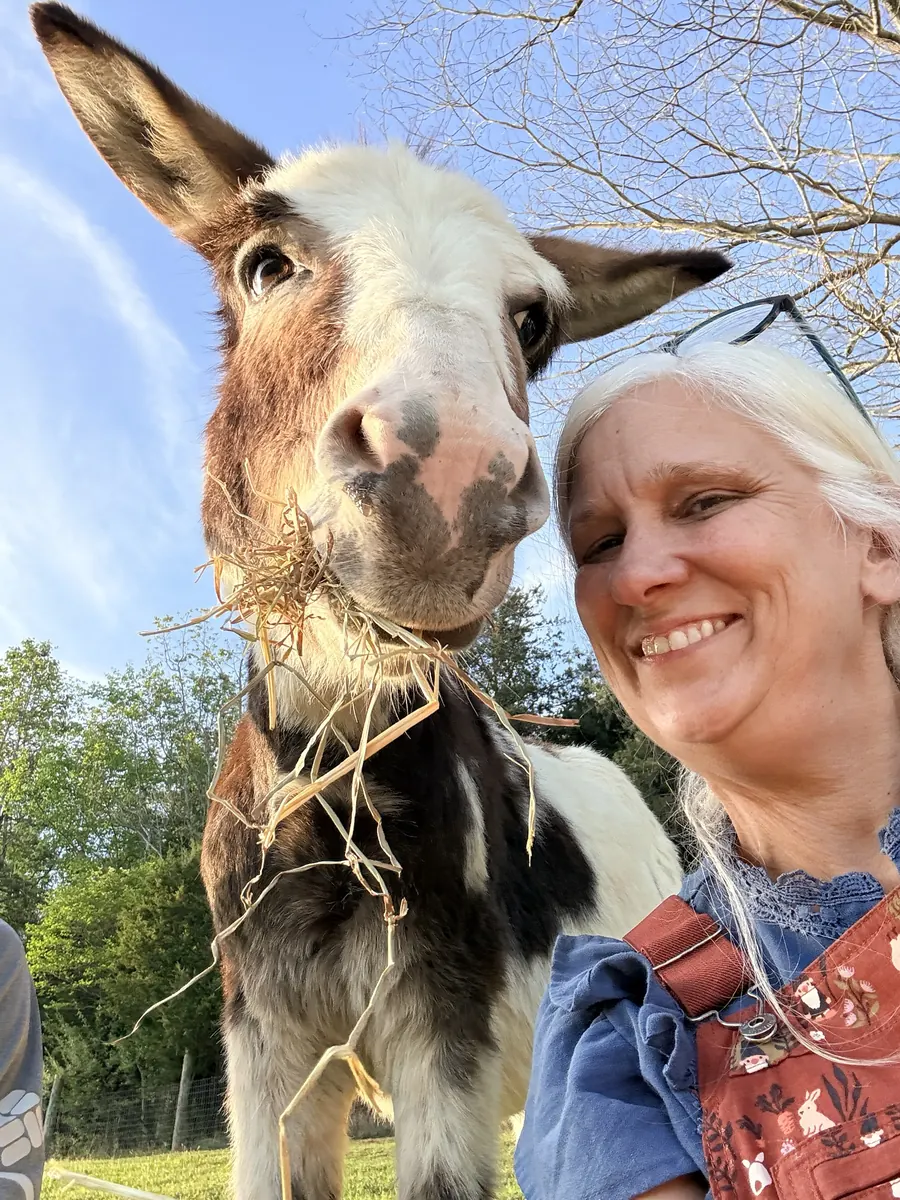
The peopliest donkey you’ll ever meet
Charlie would rather hang out with people than with other donkeys. The rest of the herd doesn’t think much of him, and it doesn’t seem to bother him one bit, because he has decided he’d rather be with us anyway. He is a cuddler.
When children come to visit, Charlie and Rainey are always the first donkeys on the scene. They will stand there forever for a scratch. They are both just sweet souls.
What we didn’t know about Rainey
When Rainey came to live with us, we didn’t realize how old she was. Donkeys hide their age well, and they hide pain even better. Then one night she choked, and it was a bad night. Our vet, Dr. Lauren, sent her team to come get her, and they cleared the choke at the clinic. Rainey made it through, and she is still here, still telling the younger donkeys what to do.
Choke is when feed gets stuck in the esophagus, the tube that carries food from the mouth to the stomach. It doesn’t block breathing the way choking does in people, but it is still an emergency. It can lead to pneumonia if feed and saliva get into the lungs, and it can damage the esophagus.
Watch Rainey’s choke story:
What choke looks like, and what to do
- Feed coming out of the nose. Green, frothy saliva and feed from the nostrils is the most common sign.
- Coughing, gulping, drooling, stretching the head and neck out after eating, sweating or pacing.
- Call your vet right away. Keep the animal as calm as you can and take away all food. Eating more makes it worse.
- Don’t try to fix it yourself. Leave it to the vet.
Choke often comes from eating too fast, not chewing well because of tooth problems, or not drinking enough water. So Rainey gets her feed soaked, she has fresh water all the time, and her teeth get checked on a schedule.
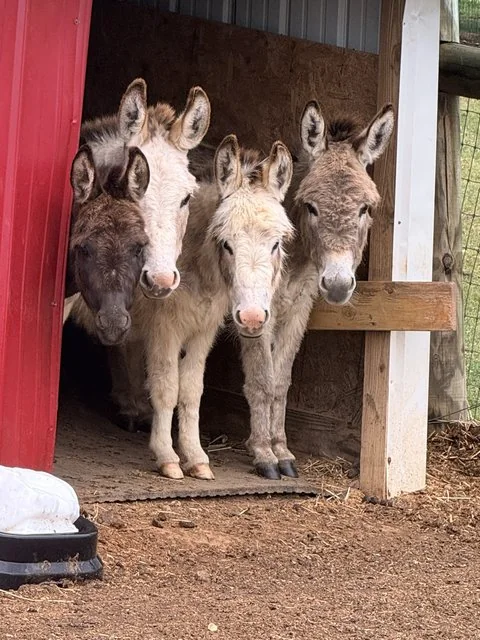
A donkey is not a small horse
Settling Rainey and Charlie in was a good reminder of how different donkeys are.
- They need a friend. Donkeys pair up and stay paired. Never keep one alone.
- They eat less than you think. The Donkey Sanctuary feeds straw as 50 to 75 percent of the diet, with low-sugar hay and limited grazing for the rest. Rich grass puts donkeys at risk of obesity and laminitis.
- They need a dry place to stand. Donkeys come from desert stock, and their coats aren’t waterproof.
- They stop and think. A horse runs first and thinks later. A donkey stops, looks and decides. That isn’t stubbornness. Let them look, then ask again.
- They hide pain. Kicking, refusing to lift a foot, or a sudden change in mood can all mean something hurts. That’s why we watch them closely every day.
- They live a long time. Thirty to forty years is common with good care.
Why this matters for the next one
Rainey’s choke is exactly the kind of emergency the Dessie Fund is for. When an animal needs help fast, we want money already set aside so the only question is how quickly we can get there.
Questions people ask about donkeys
Do donkeys need a companion?
Yes. Donkeys form strong pair bonds and do poorly alone. Keep at least two, and expect the herd to change when one of them is gone.
Is a donkey just a small horse?
No. Donkeys need fewer calories than a pony the same size, do best on a diet that is mostly straw with low-sugar hay, and their coats are not waterproof, so they need dry shelter.
How long do donkeys live?
Thirty to forty years is common with good care, so taking one on is a long commitment.
What does choke look like in a donkey or horse?
The most common sign is green, frothy feed and saliva coming out of the nose. Coughing, gulping, drooling, stretching the head and neck, and restlessness can come with it. Call your vet right away and take all food away while you wait.
For your own animals, ask your vet. Facts on this page come from The Donkey Sanctuary on feeding donkeys, The Donkey Sanctuary on donkey behaviour, and the UC Davis Center for Equine Health on choke.